 2nd·3rd·
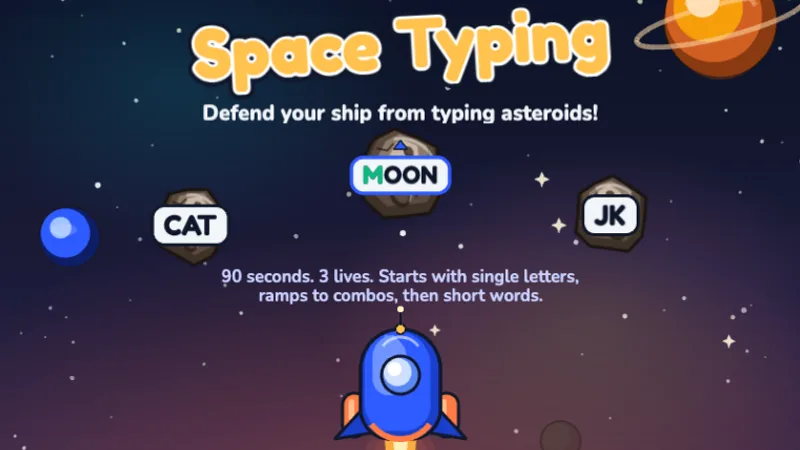
Space Typer
Blast asteroids by typing the letters before they hit your ship!
★★★☆☆
Ages 7-9
Full Keyboard
Letters
Third graders are typing real words and short sentences. These games build speed and accuracy with age-appropriate vocabulary and sentence structures.
⌨️ Quick answer: The working target for 3rd grade is 15 to 20 WPM with 92 to 95 percent accuracy. 15 WPM is 'meets expectations,' 20 WPM is 'comfortably ahead,' and 25 WPM in 3rd grade puts a child ahead of where many 5th graders are.
3rd grade is the first school year where typing stops being an enrichment activity and starts being an academic requirement. Common Core writing standard W.3.6 asks 3rd graders to use technology to produce and publish writing. State assessments in many states are given on computers. Teachers assign typed reports in 3rd grade at a rate that would have been unthinkable a decade ago. A 3rd grader who types 15 to 20 WPM comfortably keeps up with these demands. A 3rd grader at 8 or 10 WPM spends twice as long on every assignment and, in practice, writes shorter and simpler pieces because typing is the bottleneck. Closing that gap is the real job of 3rd grade typing practice. The typing games for 3rd graders below are grouped by that goal: word-level games first for children still under 15 WPM, then sentence games once the words come without hunting. For children who need a finish line to care about the clock, a car typing game does more for speed in ten minutes than a drill does in thirty; the full set is on the type racing games page. For a child who wants speed with a theme, the fruit ninja typing game and the bubble typing game below both run on 3rd grade word lists. The space type game is the one most 3rd graders ask for by name once they can use the full keyboard. Dance mat typing level 3, the bottom row, is the level most 3rd graders still need. A word-per-target game such as typing jump fits this year well: one word, one jump, no reading load beyond the word itself. Around Halloween the same word work is available as spooky typing games for kids, with a 20-minute lab plan for that week.
Third grade is the Common Core deadline for typed writing, which makes it the year parents most often go looking for typing games for children. The games below are the ones that close a speed gap fastest.
No login, no ads, instant play.
2nd·3rd·
Blast asteroids by typing the letters before they hit your ship!
 2nd·3rd·
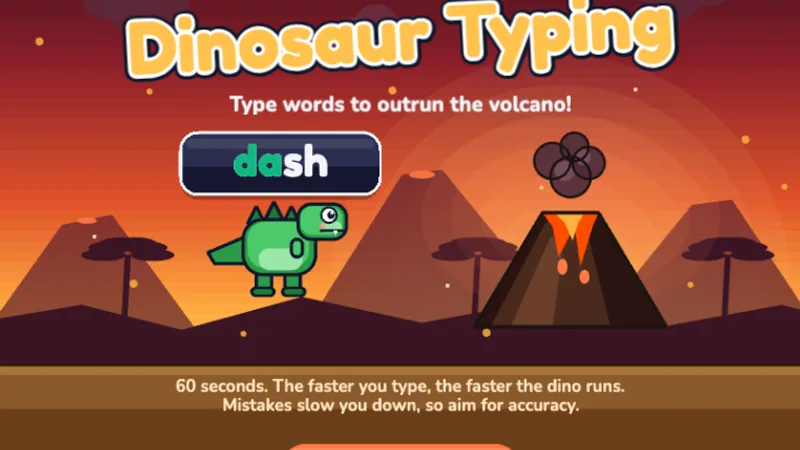
A free typing dinosaur game — type words to help your dinosaur run faster and escape the volcano!
 2nd·3rd·
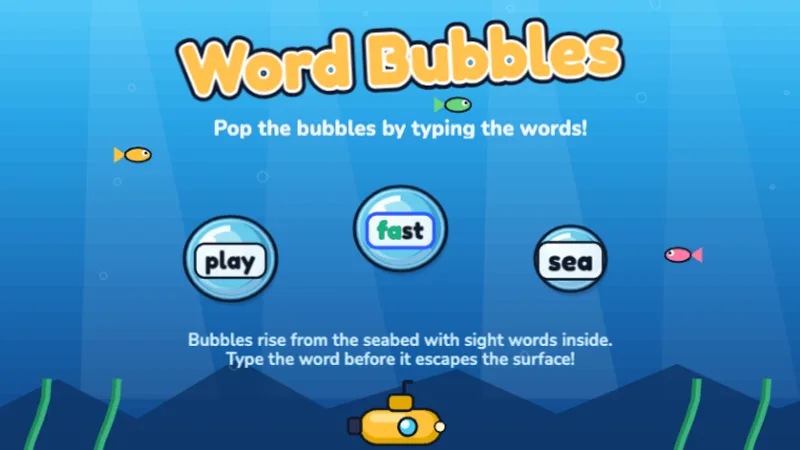
Pop ocean bubbles by typing the words inside before they float away!
 3rd·4th·
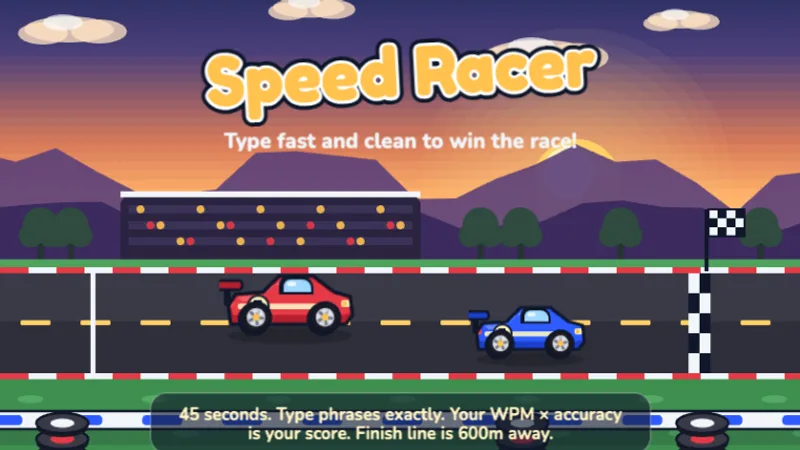
Race your car by typing as fast as you can — faster typing means faster speed!
 2nd·3rd·
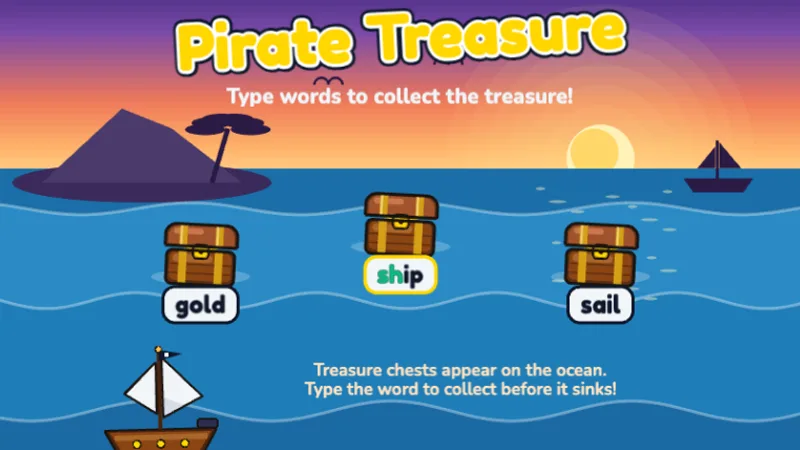
Type words to collect treasure chests before they sink into the ocean!
 2nd·3rd·
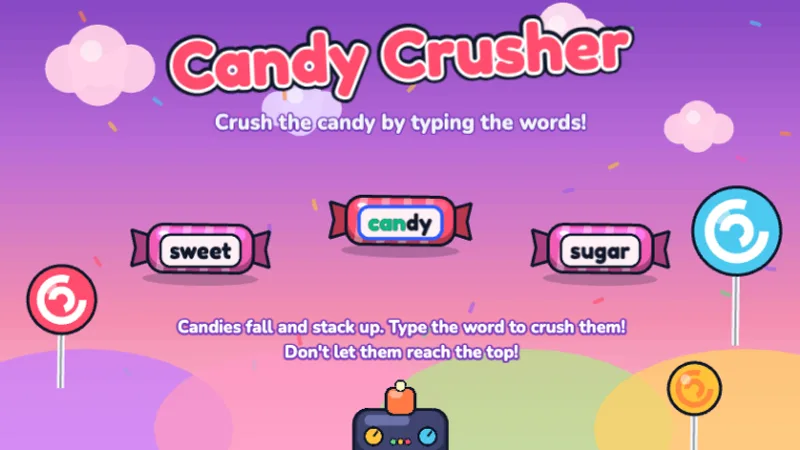
Crush falling candy by typing the words before they stack up!
 2nd·3rd·
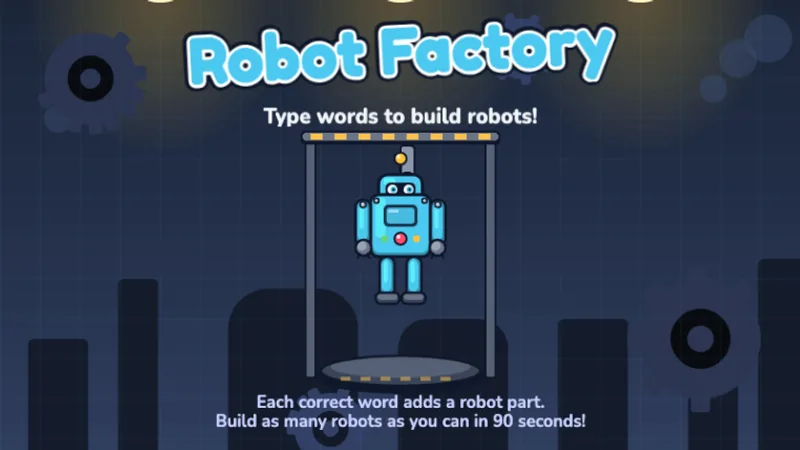
Type words to assemble robot parts and build as many robots as you can!
 3rd·4th·
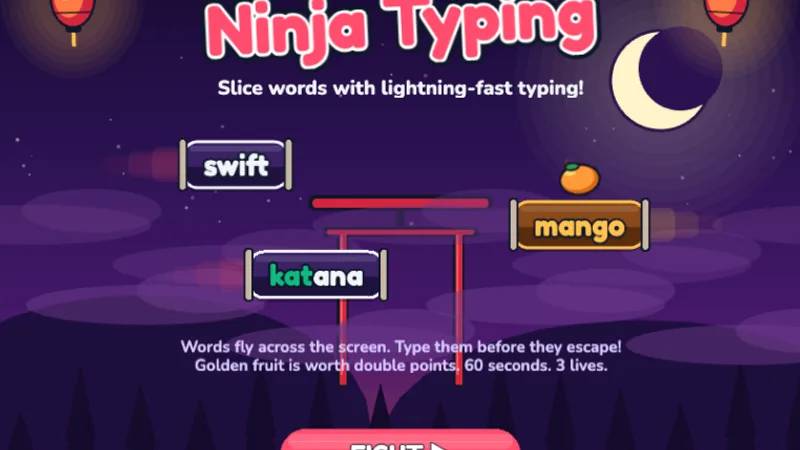
Words and golden fruit fly across the screen — slice them with lightning-fast typing!
 3rd·4th·
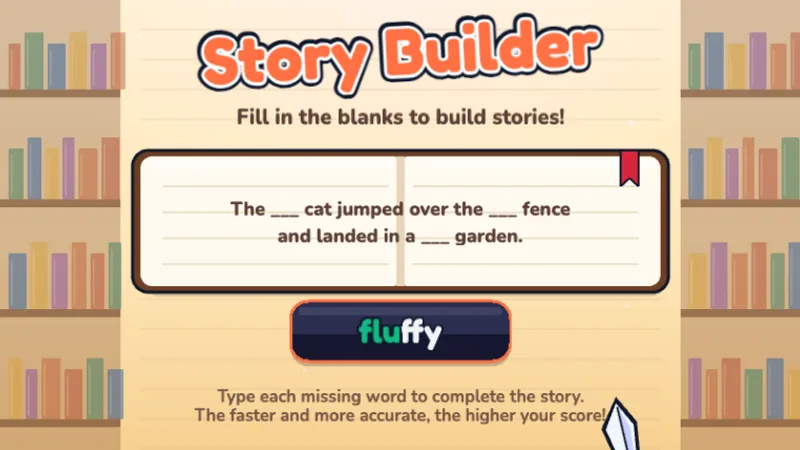
Fill in the missing words to complete fun stories — typing meets creativity!
 3rd·4th·5th·
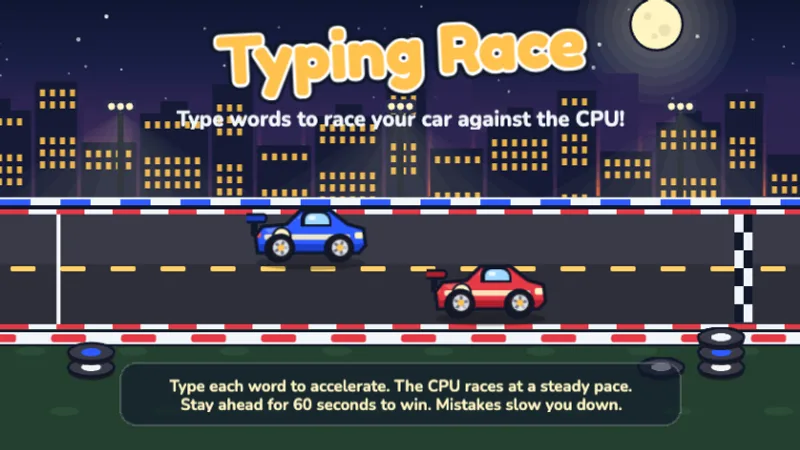
Race your car against the CPU by typing words — type faster to pull ahead!
 2nd·3rd·4th·
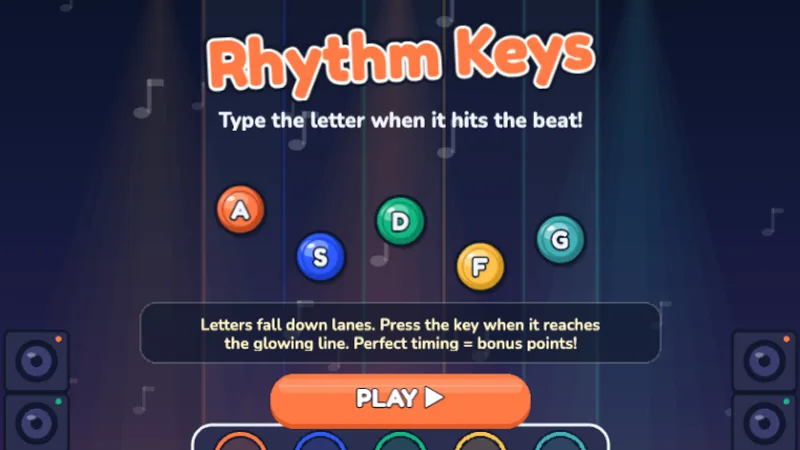
Type letters to the beat — hit Perfect timing for bonus points!
 1st·2nd·3rd·
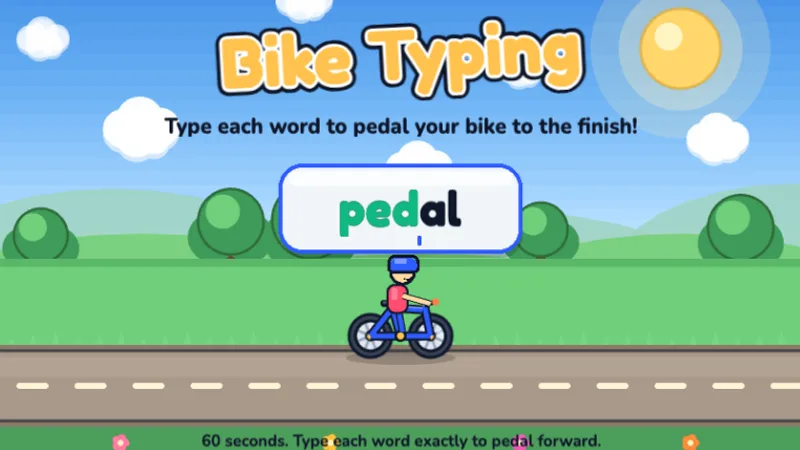
A free typing bike game — type each word to pedal your bike to the finish line!
 1st·2nd·3rd·4th·
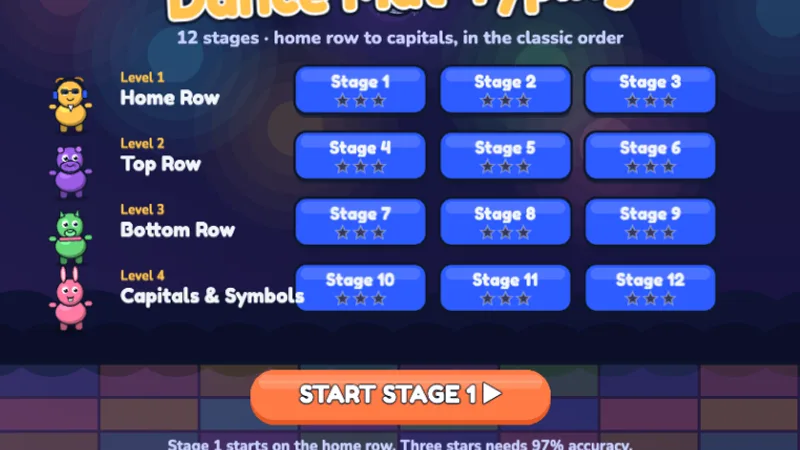
Twelve stages from the home row to capitals — dance your way through the keyboard!
 2nd·3rd·4th·5th·
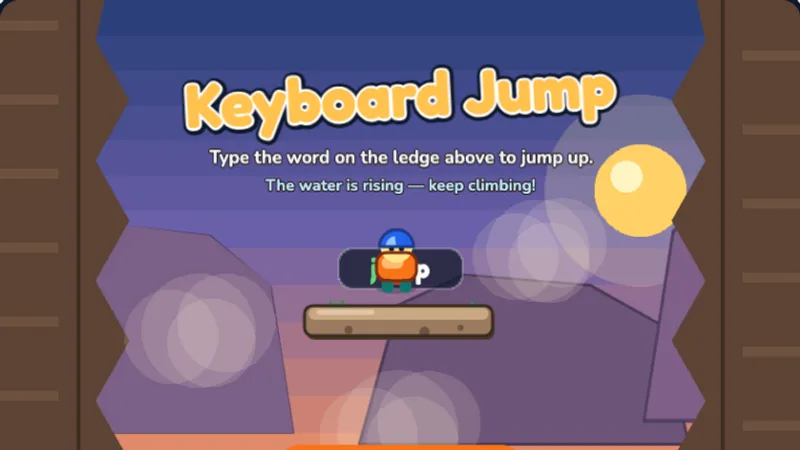
Type the word on the ledge above to jump up the canyon before the water rises!
 2nd·3rd·4th·5th·
Type the word each ghost carries to send it home before it reaches the lantern!
 2nd·3rd·4th·5th·
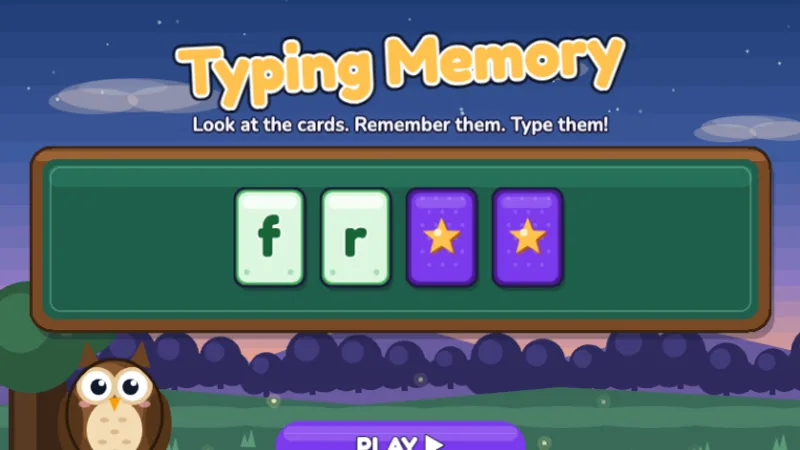
Watch the cards flip up, remember the letters, then type them from memory!
 2nd·3rd·4th·5th·6-8
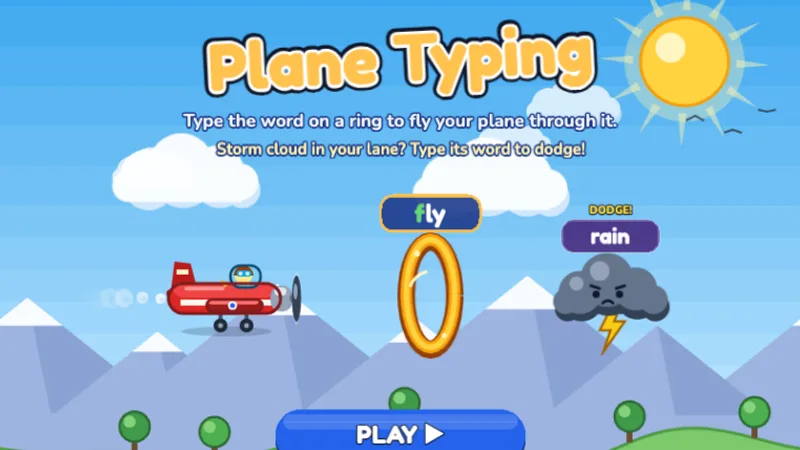
Type the word on each golden ring to fly your plane through it, and dodge the storm clouds!
Space Typer is still useful in 3rd grade, especially its middle and late levels where two-letter combinations become three- and four-letter words. Use it to bridge the word-typing work that carried over from 2nd grade.
Dino Dash is the 3rd grade headline word game. Words come in steady, the dino runs while they type, and accuracy earns speed. The pacing matches exactly what a 3rd grader needs to build: consistent word-level typing without rushing past mistakes.
Word Bubbles works as the rotation partner for Dino Dash. The sight-word vocabulary overlaps with what your 3rd grader is reading in class, which doubles the value — typing practice and reading review in one fifteen-minute block.
Speed Racer is where 3rd grade starts shifting toward pure speed work. The live WPM display on screen turns abstract progress into a number your child can chase. Introduce this in the second half of the year, after word-level typing is fluent — otherwise the WPM focus pulls them toward speed over form.
3rd grade is the turning point where typing becomes a practical skill. Students type faster than they can write by hand, and typing becomes their preferred way to express ideas. The goal is 15-20 WPM with reasonable accuracy.
3rd grade is the first year where WPM actually matters for school. Common Core W.3.6 does not name a WPM number, but most technology curricula set 15 WPM as the working 3rd grade target because that is approximately the speed at which a student can type as fast as they can think a sentence. Below 15 WPM, thinking out-paces typing and writing suffers — students shorten ideas to what they can get typed before they forget them. At 15 WPM and above, the keyboard stops being the bottleneck. If your 3rd grader is below 12 WPM in March or April, an extra fifteen minutes of daily practice from then through summer usually closes the gap before 4th grade starts.
3rd grade is where typing practice becomes routine and the question shifts from 'should we?' to 'how much?' The answer is still short sessions — but now with a clearer goal and a measurable way to check progress. Here is the 3rd grade routine that works.
Run a one-minute typing test to get a baseline. If your 3rd grader is at 12 WPM or higher with good form, jump straight to Dino Dash and Speed Racer. Below 12 WPM or with visible home-row issues, back up to Space Typer and Key Catcher until the foundation is clean. Skipping this step wastes a semester.
An hour per week is the 3rd grade sweet spot for steady progress. Four sessions of 15 minutes also works. More than 20 minutes per session starts to produce diminishing returns at this age because fine-motor fatigue sets in.
One week, push for accuracy — any WPM is fine as long as mistakes are under 5 percent. The next week, push for speed — let accuracy drop slightly if it means faster overall WPM. Rotating this way prevents the plateau that 3rd graders hit when they focus on only one dimension.
Run the typing test once a month and write the number down. 3rd grade progress is typically 1 to 2 WPM per month with consistent practice. A plateau longer than six weeks usually means the same game has been played too much — rotate to a different one for two weeks and progress restarts.
3rd grade is the first grade where state standards implicitly expect typing competence. Forty-five to sixty minutes of weekly keyboarding instruction, delivered in three 15-to-20-minute blocks, is enough for most 3rd graders to meet Common Core W.3.6 by spring. A typical rotation: Monday for accuracy-focused games, Wednesday for speed-focused games, Friday for a short typing test and a writing prompt typed into a document. The Friday writing piece is where typing skills transfer into real schoolwork — without it, keyboarding stays siloed.
One device per student, always. 3rd graders are old enough for headphones, which should be standard because the audio feedback in many typing games is part of how they reinforce correct keys. Shared devices produce shared habits and one child gets dragged to the other's level.
Fifteen to twenty minutes per session in 3rd grade. Shorter than fifteen and students never get into flow; longer than twenty and accuracy declines. If your schedule only allows longer blocks, split them with a two-minute standing or stretching break — counterintuitively, the break increases total productive minutes.
Many schools start requiring typed assignments in 3rd grade. If your child can type 15+ WPM, they're in great shape. Focus on accuracy first — speed follows naturally.
My 3rd grader types 10 WPM. Is that okay?
It is below average but fixable. 3rd grade WPM has a wide range — 10 WPM with good form is a better starting point than 14 WPM with hunt-and-peck. Add two 15-minute sessions per week between now and the end of the school year. Most 3rd graders gain 5 to 8 WPM in a semester when practice frequency is bumped up like this.
They type fast at home but freeze on school typing tests.
This is almost always a test-anxiety issue, not a typing issue. Two things help. First, use our Typing Test at home once a week so the test format becomes familiar. Second, remind your child that typing tests measure best effort, not best-ever score — a slightly slower test score is not a catastrophe. Most children's 'official' WPM is about 80 percent of their relaxed WPM, and that gap closes with test exposure.
My 3rd grader skips Shift and types in all lowercase.
This is a choice children make because Shift-plus-letter is the hardest coordination move on the keyboard — it requires the opposite hand's pinky finger to press while a different finger is about to type. Give it two to three weeks of deliberate practice at the start of each session. Have your child type their own first and last name (which requires two shift presses) as a warm-up. Shift becomes automatic once the motion is repeated about 200 to 300 times, which is less practice than it sounds.
Age-by-age WPM benchmarks that explain why 15 WPM is the 3rd grade target and what accuracy percentage matters more than raw speed.
3rd grade is where typing starts to meet handwriting speed for most children — this post explains the transition and what balance looks like.
A twelve-week at-home plan that takes a 3rd grader from foundation work through 20-plus WPM with realistic weekly checkpoints.
Play the same four levels as the BBC course here, then move on to the word and sentence games a 3rd grader needs after Level 4.
The full lesson plan from letter recognition through 30 WPM, with recommended games and session lengths per grade.
Our grade-level targets align to U.S. keyboarding standards and published research:
Last reviewed June 2026 · TypingGamesKids. See the full typing speed by age guide.
Take a Typing Test
Start Typing Test