 Pre-K·K·
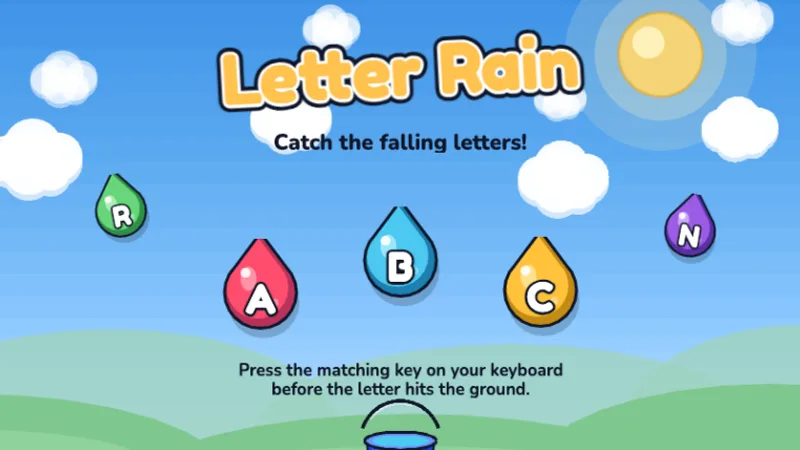
Letter Rain
Catch falling letters by pressing the right key before they hit the ground!
★☆☆☆☆
Ages 4-6
Letters
Free educational games that teach letters, spelling, numbers and keyboarding through play — built for kids ages 3 to 14. Every game here makes the skill itself the game: catching a falling letter means recognizing it, escaping a dinosaur means spelling real words. No login, no ads, nothing to install.
Our games are keyboard-based, so alongside letters, spelling and numbers, kids quietly build the one school skill almost every district now expects by 3rd grade: typing. Pick your child's age or grade below to see games matched to what they're learning right now.
Preschool · No reading required
Letter recognition and cause-and-effect games a preschooler can play with one finger — an adult beside them, no reading needed.
Ages 5-6 · School readiness
Alphabet, letter sounds and first number games that line up with what kindergarten actually teaches.
Ages 6-7 · Reading takes off
Games that ride the 1st-grade reading explosion: letter position, first words and numbers.
Ages 7-8 · Words & spelling
Spelling and word-building games for the grade where kids stop decoding and start producing.
For teachers · K-8 · No accounts
Games that survive a real computer lab: 15-minute rotations, shared Chromebooks, zero setup.
Ages 8-14 · Typing by grade
Older kids move to our grade-level typing pages — speed, accuracy and sentence work through middle school.
A sampler across ages — every game is free and starts instantly in the browser.
Pre-K·K·
Catch falling letters by pressing the right key before they hit the ground!
 K·1st·
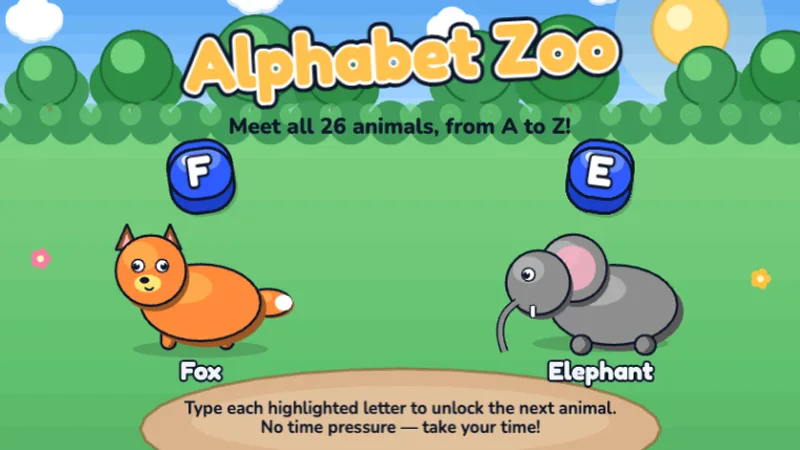
Type the alphabet from A to Z — type each letter to unlock the next animal!
 K·1st·
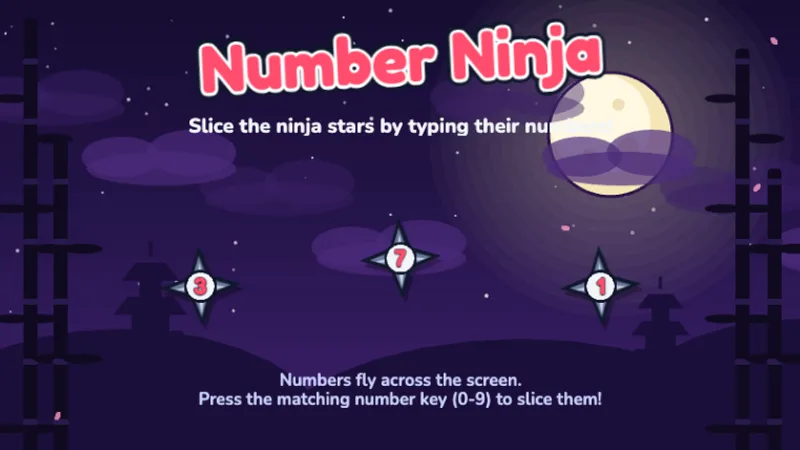
Slice ninja stars by typing their numbers — learn the number row!
 2nd·3rd·
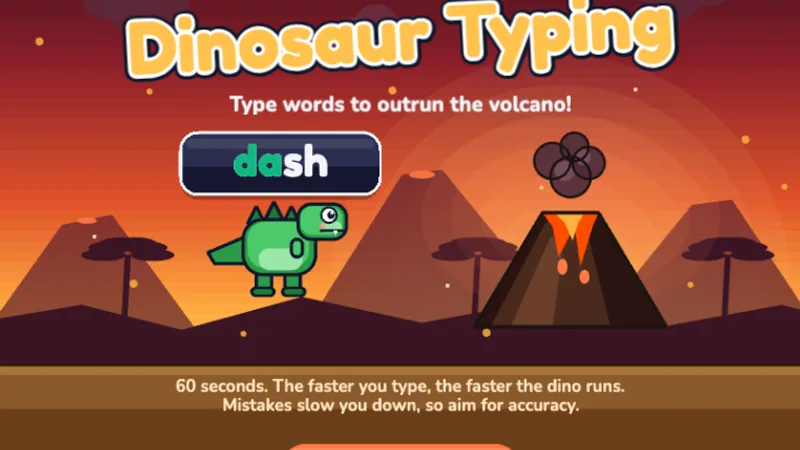
A free typing dinosaur game — type words to help your dinosaur run faster and escape the volcano!
 2nd·3rd·
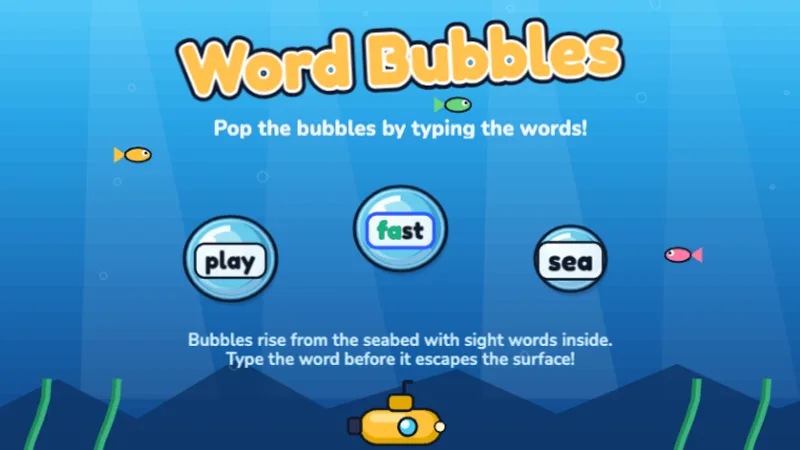
Pop ocean bubbles by typing the words inside before they float away!
 3rd·4th·5th·
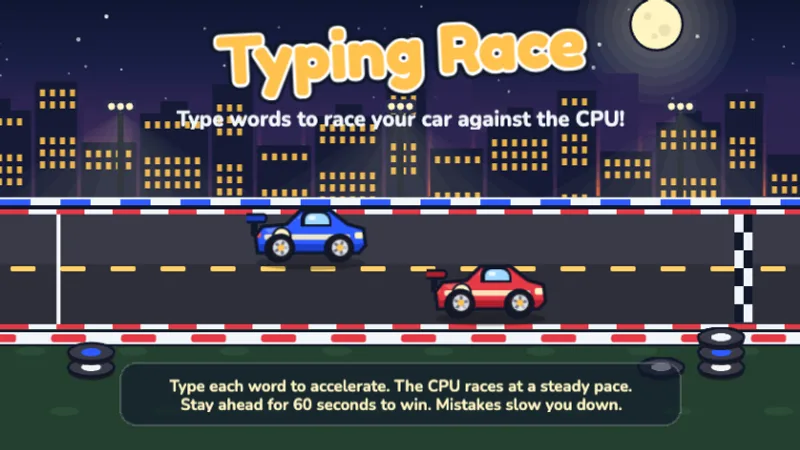
Race your car against the CPU by typing words — type faster to pull ahead!
 4th·5th·
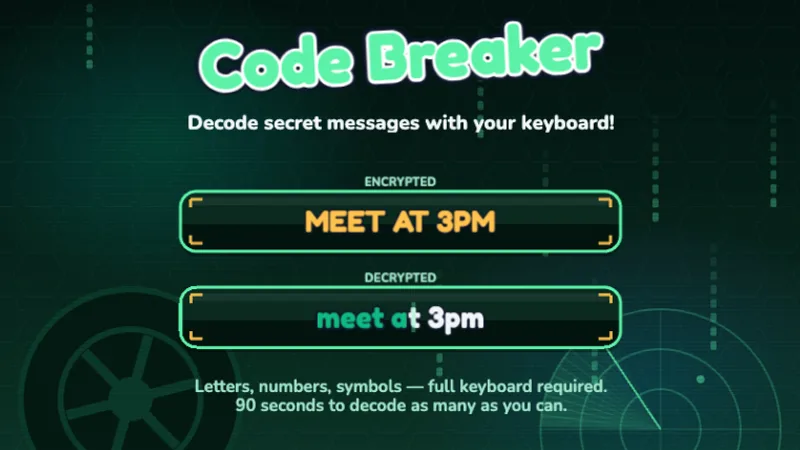
Decode secret messages using letters, numbers, and symbols — full keyboard mastery!
 3rd·4th·
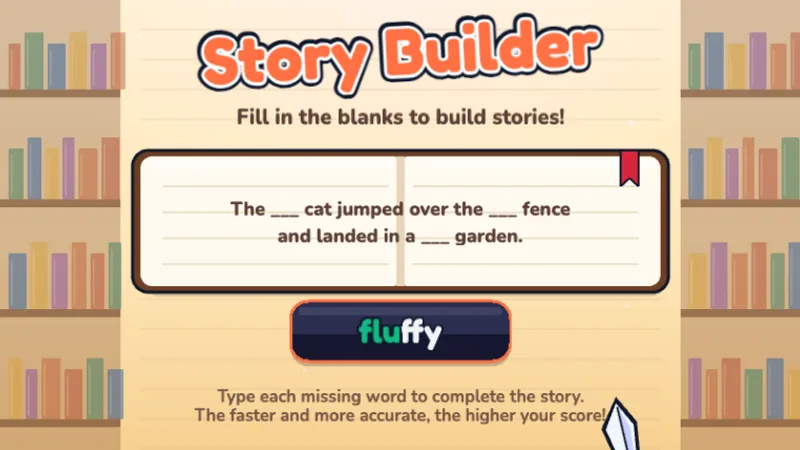
Fill in the missing words to complete fun stories — typing meets creativity!
Most "educational games for kids" fall into one of two designs. The first wraps a quiz around an unrelated game — answer three math questions, earn two minutes of gameplay. Kids learn to speed through the questions. The second makes the skill itself the game mechanic: you cannot progress without doing the thing being taught. Research on game-based learning consistently favors the second design, and it's the only kind we build.
One honest caveat: our games teach through the keyboard. That makes them strong on literacy skills — letters, spelling, word building, sentence fluency — and on keyboarding itself, but this is not a math-curriculum or science site. If that's the slice your child needs, you're in the right place.
All 32 games, no login, no accounts, no ads, no in-app purchases, no "premium" wall halfway through. Free means free.
No personal information is collected from children, ever. Scores live in the browser. See our COPPA statement.
Any modern browser on computers, Chromebooks and iPads with a keyboard. Nothing to install, nothing to update.
Not sure where to start? Our free typing test suggests a level, or browse all games. Parents may also want our parent guide; teachers, the classroom games page.
A good educational game teaches one specific skill and gives instant feedback when the child gets it right or wrong. Look for games matched to your child's age: letter recognition games for ages 3-5, spelling and word-building games for kindergarten through 2nd grade, and speed or accuracy challenges for older kids. The games on this page all follow that structure, teaching letters, spelling, numbers and keyboarding through play.
Only if the learning is inside the gameplay, not wrapped around it. A game where typing the correct word IS the action teaches spelling; a game that pauses for a quiz between levels mostly teaches kids to rush through quizzes. Every game here makes the skill itself the game mechanic — you cannot win Letter Rain without recognizing letters, and you cannot win Dino Dash without spelling real words.
Yes. Every game on this site is completely free with no login, no accounts, no ads and no in-app purchases. The games run in the browser on computers, Chromebooks and iPads with a keyboard, and are COPPA compliant — no personal information is ever collected from children.
Around age 3-4 for letter recognition games, as long as sessions stay short (under 10 minutes) and an adult plays alongside. By kindergarten most kids can play independently for 10-15 minutes. There is no rush: the goal at the youngest ages is discovering that letters on the keyboard match letters in books, not building speed.